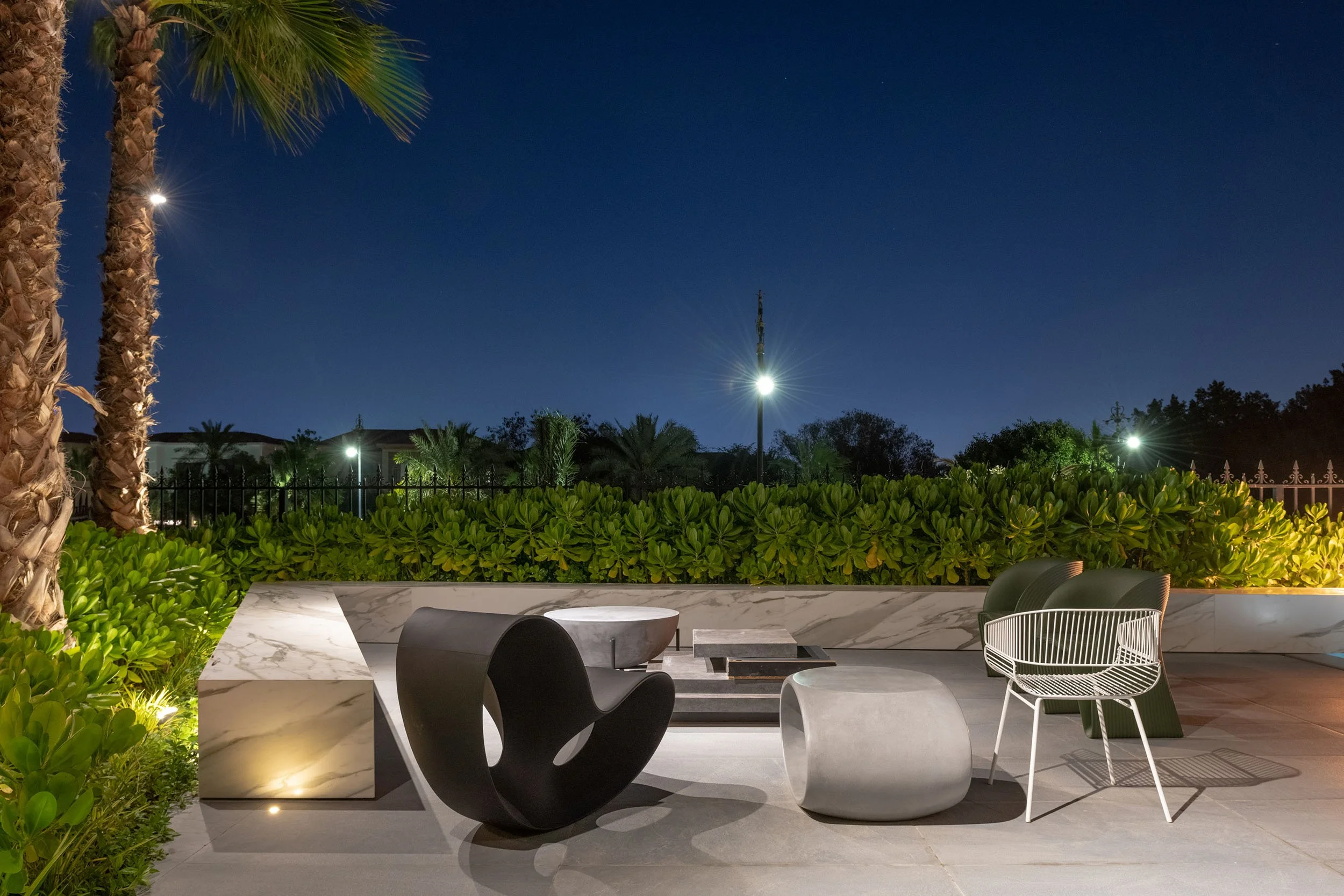
The true character of an architectural design is revealed as much at night as during the day. Light has the power to shape perception, define spaces, and create atmosphere. A proper lighting plan works with a building’s structure and becomes an integral part of its expression. This synergy between light and form is what professional villa lighting design delivers.
Accentuating form and texture:
Strategic lighting highlights architectural details. Grazing light along a stone wall reveals its rough texture. Uplighting on a column emphasizes its height and shape. This technique turns flat surfaces into dynamic visual elements, celebrating the materials and craftsmanship.
Defining spatial boundaries:
Light can carve areas within open spaces. A linear fixture over a kitchen island anchors it as a distinct zone. Soft, low level perimeter lighting in a living room creates a cozy boundary. This use of light organizes large volumes into intimate, functional spaces without physical walls.
Creating visual hierarchy:
A professional design guides the eye. Brighter light on a central staircase or art piece establishes a focal point. Soffer, ambient light in circulation areas supports the main features. This layered approach creates depth and order, making the interior feel balanced and intentional.
Ensuring functional clarity:
Good lighting supports daily activities. Dedicated task lighting is placed for reading, cooking, or working. Pathway lights ensure safe movement between rooms and to outdoor areas. Each fixture serves a clear purpose, blending practicality seamlessly with the overall design.
Extending architectural lines:
Lighting can follow and reinforce architectural gestures. Recessed linear LEDs can trace the curve of a ceiling. Step lights can repeat the rhythm of a floating staircase. This continuity makes the lighting feel inherent to the structure, not an added feature.
Unifying indoor and outdoor flow:
Consistent lighting principles connect the villa to its grounds. Similar color temperatures and styles used on a terrace or façade visually expand the interior space. Glass walls seem to disappear, creating one continuous environment after dark.
Professional lighting design does not only fill a room with light. It uses illumination as a tool to articulate architecture. It makes a villa feel larger, more detailed, and perfectly suited for both grand events and quiet evenings. The result is a home that feels complete from day to night.


